
Want to know what South African consumers think?
So do we!
That's why we're always busy researching new sectors of the market to better understand South African consumers and what motivates them.
News | Why brand makeovers fail: The consumer research that brands can't afford to ignore
Why brand makeovers fail: The consumer research that brands can't afford to ignore
June 09 2026 By BMi Research
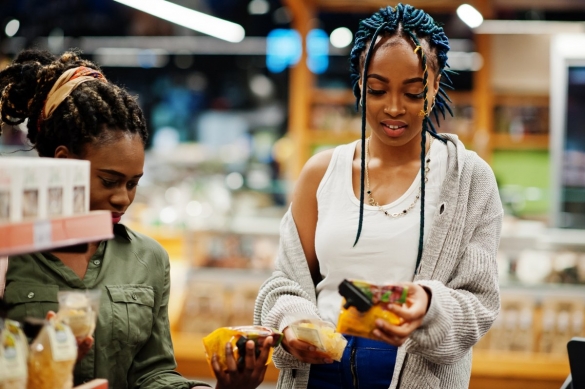
There are a number of reasons why brands rebrand or reformulate products. But in the long line of checks and balances put in place during these processes, one critical factor is often pushed to the bottom of the priority list - consumer response to the change. It might seem inconsequential in the greater picture of brand evolution, but negative consumer response can derail brand changes, resulting in more than just financial losses.
It has happened to some of the world's biggest brands, from Coca-Cola and its failed recipe change in 1985, to Tropicana and its post-rebrand $30 million sales loss in 2009, and more recently Twitter's 80% brand value loss following its change to X and the removal of its iconic blue bird logo.
In many cases, these formulation and branding makeovers were quickly abandoned. It took Coca-Cola just 79 days to reintroduce its original recipe, branded as Coca-Cola Classic to re-establish brand trust, and Tropicana, a few months to reintroduce its original branding. The latter amounted to a $50 million loss when all was said and done.
There are dozens more stories just like this where a brand's vision to change was put ahead of one of the most fundamental branding tenets - customer loyalty.
Recently, BMi Research worked with a leading South African brand ahead of a planned market launch of new, modernised packaging.
"The new packaging direction aimed to refresh the brand's image and appeal to new customers. Before implementation, we tested the concept with consumers. Our research* revealed that while the new design was considered contemporary and visually appealing, it weakened key brand cues that consumers relied on to identify the product on shelf. Our findings offered guidance to the brand to refine its approach, to preserve the equity built over many years while still achieving a more modern look," explains Michelle Daines, head of research at BMi Research.
This demonstrates in practical terms the importance of undertaking the correct consumer research, and refining brand plans in line with those findings before major investment is committed.
"Longtime customers are fiercely loyal to branding, packaging and product recipes, particularly when it comes to ingredients and taste. This powerful emotional connection is based on familiarity, nostalgia and trust, and outweighs a corporate view on modernisation. Loyal customers will trade a preferred brand for a competitor brand if they feel let down, lied to or unheard," says Daines.
This was evident in South Africa this year, when Bokomo changed its porridge formulation after 64 years. Brand owner PepsiCo was quoted as saying the recipe change was due to a need to replace older equipment, which had become outdated and unreliable, and could affect the quality of the product. It had also cut the sugar content, 'supporting healthier choices for families'.
PepsiCo said the brand had conducted a national consumer taste test, with both current ProNutro customers and consumers of other cereals, which had received mixed feedback. After the launch, consumers complained about the cereal's texture and mixability - two non-negotiables for this particular type of porridge.
Despite the fact that the changes appeared to be essential to the product's future, consumer backlash to the next generation ProNutro was significant. The saga ended with a public apology from Bokomo, and a promise to use customer feedback to improve the new recipe to 'win back customer trust', as the old formula would not be returning. Time will tell the true extent of this consumer fallout.
Daines says this is not unlike the Kellogg's Rice Krispies reformulation of 2018, when that cereal brand too changed its iconic recipe and faced a hostile consumer reaction.
"Kellogg's changed Rice Krispies from its historic plain puffed rice cereal to a vanilla flavoured variant with twice the amount of sugar. Customers felt duped because the cereal was billed as being new and improved, when in fact it was an entirely new product. Kellogg's too said it had first tested the product on consumers, and that the research showed both the concept and cereal itself were 'significantly liked by all consumers'," says Daines.
The original Rice Krispies recipe was reintroduced just over a year later, alongside the new vanilla variant.
All of these cases illustrate just how influential consumer buy-in is - something marketers often underestimate where trends, assumptions, or internal opinions are used as the basis for making brand changes. What seems like a minor product reformulation, packaging update or branding refresh can be perceived very differently by loyal customers.
In the face of pursuing growth, modernising and remaining relevant, what could these brands have done differently?
"All brands do research ahead of major brand or formulation changes. But that research is often limited to general consumers not customers. There's a difference. Ask loyal customers for their input on brand changes, and you'll get an entirely different perspective than from general consumers. When brand reputations and significant financial investments are on the line, you want to be 100% sure of the changes you're making before you make them," Daines says.
Every brand change introduces risk. But consumer research correctly undertaken reduces that risk while protecting brand equity and allowing brands to objectively gauge exactly how consumers will react before making major changes.
Brands are allowed to evolve, that is not in question. But it's how that evolution is guided that makes all the difference.
*Note: This research specifically was undertaken by BMi. All other studies, statistics or consumer research quoted herein were undertaken by competitor research houses.